Truck Alignment Problems That Can Lead to DOT Inspection Violations
For commercial truck operators in Maryland, DOT inspections are part of doing business. Whether you run a single truck or manage an entire fleet, inspection violations can lead to costly downtime, out-of-service orders, and repair expenses that could have been avoided.
Many fleet owners focus on brakes, tires, and lighting when preparing for inspections. While those systems deserve attention, one issue often gets overlooked: truck alignment.
Poor truck alignment affects more than tire wear. It can contribute to steering problems, suspension wear, and tire conditions that attract attention during a DOT inspection. As summer hauling season ramps up across Maryland, now is a good time to take a closer look at your trucks before small alignment issues become larger compliance concerns.
Why Truck Alignment Matters
Truck alignment refers to the positioning of the wheels and suspension components relative to the road and each other. When alignment is off, the truck does not track properly.
A truck with alignment problems may:
- Pull to one side
- Require constant steering correction
- Experience uneven tire wear
- Put extra stress on suspension components
- Create handling issues during braking
These problems can affect safety and may contribute to conditions that inspectors look for during roadside and annual DOT inspections.
How Maryland Road Conditions Affect Truck Alignment
Maryland roads can be tough on commercial vehicles.
Throughout the winter and spring months, trucks encounter:
- Potholes
- Rough pavement
- Construction zones
- Uneven road surfaces
- Curbs and loading dock impacts
By June, many trucks have already spent months absorbing damage from winter road conditions. A hard pothole strike or repeated impacts can gradually push alignment out of specification.
Drivers often adjust to the change without realizing it. What starts as a slight pull can eventually turn into excessive tire wear and suspension problems.
Uneven Tire Wear Can Raise Red Flags
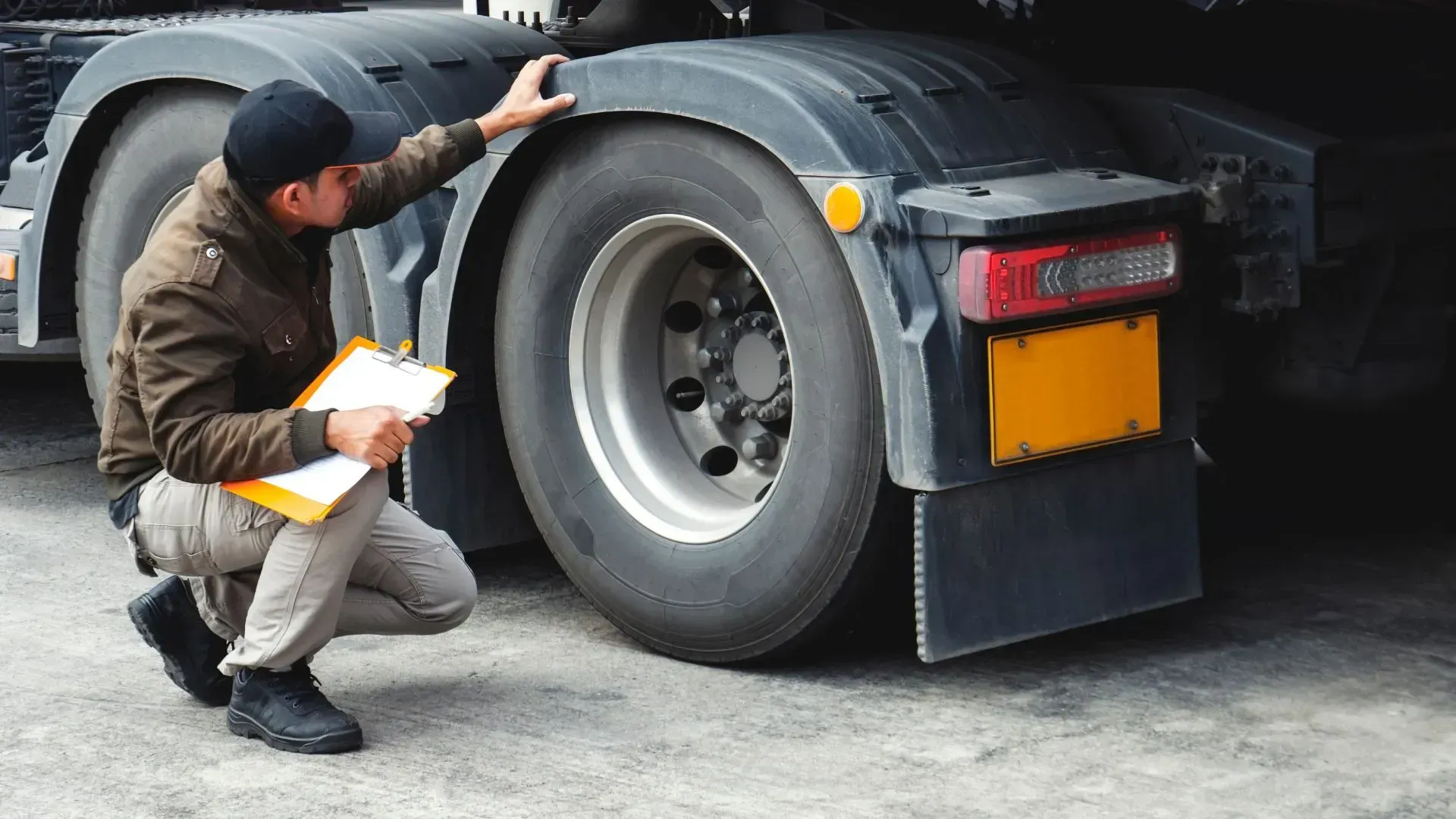
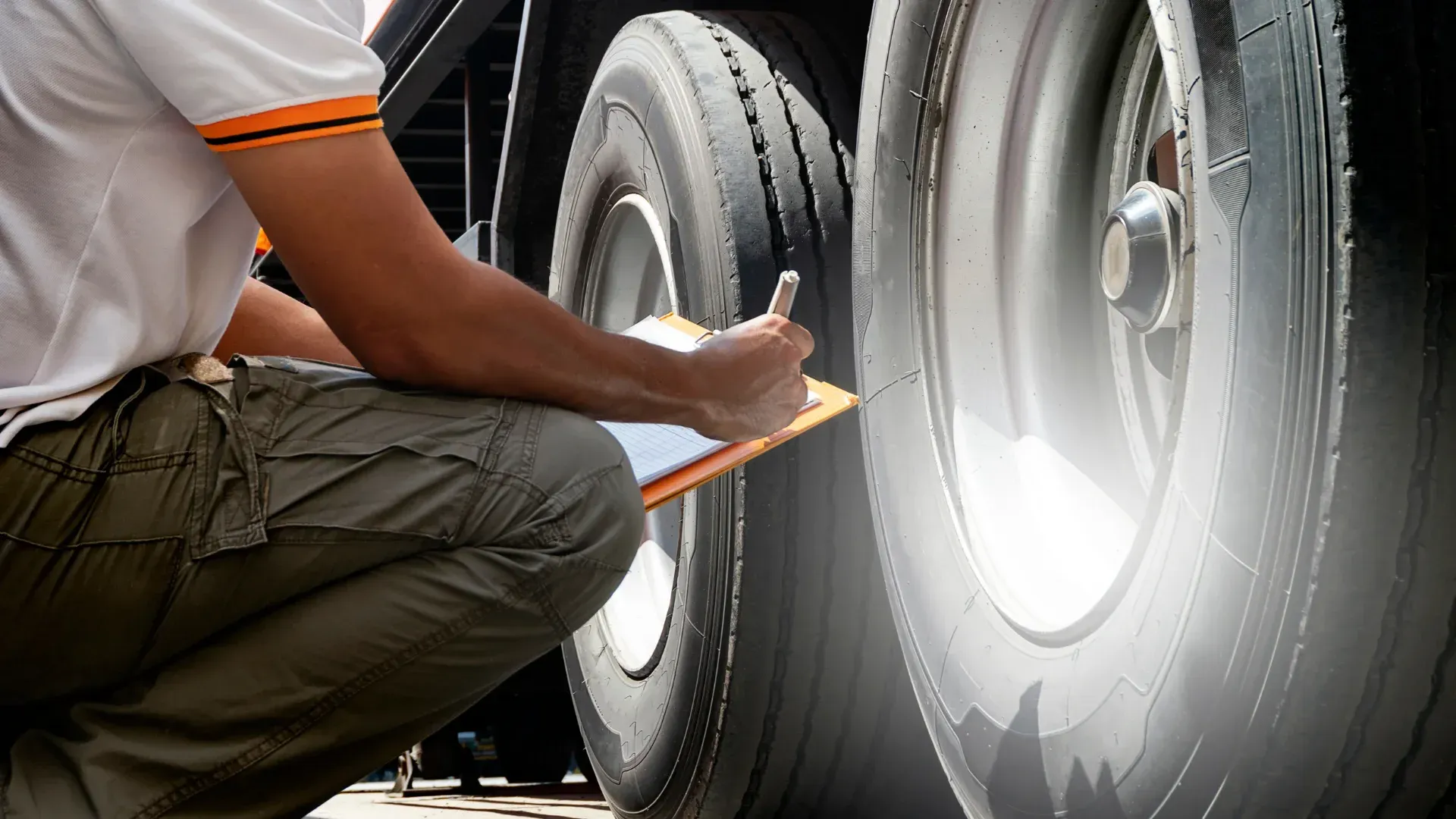
One of the most visible signs of poor truck alignment is uneven tire wear. Inspectors routinely examine tire conditions during DOT inspections. If alignment problems have caused irregular wear patterns, those tires may receive closer scrutiny.
Common alignment-related wear patterns include:
Feathering
Feathering occurs when tread ribs develop a sharp edge on one side and a rounded edge on the other. This often points to improper toe alignment.
One-Sided Wear
Excessive wear along the inside or outside edge of a tire can indicate camber problems.
Rapid Tread Loss
When truck alignment is significantly off, tires may wear much faster than expected. Beyond inspection concerns, premature tire replacement can become a major expense for fleets operating multiple vehicles.
Steering Problems That May Attract Attention
A truck that does not steer properly can create safety concerns for both drivers and inspectors.
Signs of steering-related truck alignment issues include:
Pulling to One Side
If a truck constantly drifts left or right, alignment may be the cause.
Off-Center Steering Wheel
A steering wheel that sits crooked while driving straight often indicates an alignment problem.
Wandering on the Highway
Drivers may find themselves making constant steering corrections to keep the vehicle in its lane.
These conditions may not automatically fail a DOT inspection, but they often signal underlying issues that deserve attention.
Suspension Wear and Alignment Problems Often Go Together
Truck alignment problems and suspension wear frequently occur at the same time. As suspension components wear, alignment angles change. Likewise, poor alignment can place additional stress on suspension parts.
Inspectors may identify concerns involving:
- Worn tie rods
- Damaged bushings
- Loose steering components
- Worn kingpins
- Suspension damage
These conditions can result in violations if they affect safe operation.
At KG Truck & Auto, we often find alignment issues while inspecting steering and suspension systems during routine maintenance.
How Alignment Problems Can Affect Brake Performance
Brake systems receive significant attention during DOT inspections. Many drivers do not realize that poor truck alignment can influence braking performance.
When alignment is off:
- Braking may feel uneven
- Tires may lose traction unevenly
- The truck may pull during braking
While brake components themselves may still be functional, alignment-related handling issues can make the vehicle more difficult to control.
For fleets operating throughout Baltimore, Annapolis, Glen Burnie, and surrounding areas, maintaining proper truck alignment helps support overall vehicle handling.
Warning Signs Your Truck Needs Alignment Service
Drivers are usually the first to notice alignment problems.
Common signs include:
Uneven Tire Wear
Inspect tires regularly and compare wear patterns across the axle.
Steering Wheel Vibration
Vibration can indicate alignment issues, tire problems, or suspension wear.
Vehicle Pulling
A truck that drifts left or right should be inspected.
Increased Driver Fatigue
Constant steering correction becomes tiring during long routes.
Reduced Tire Life
If tires seem to wear out faster than expected, truck alignment should be checked.
Why Fleet Managers Should Pay Attention
Truck alignment problems rarely stay isolated.
What begins as a minor alignment issue can lead to:
- Increased tire costs
- Additional suspension repairs
- Steering concerns
- Vehicle downtime
- Potential DOT inspection violations
For fleet operators, these expenses add up quickly.
Regular inspections help identify alignment issues before they affect other systems.
Truck Alignment Services at KG Truck & Auto
KG Truck & Auto works with commercial fleets, owner-operators, diesel trucks, and work vehicles throughout Maryland.
Our team inspects:
- Tire wear patterns
- Steering components
- Suspension systems
- Alignment angles
- Related wear items
We understand the challenges Maryland truck owners face and help identify issues before they create larger repair bills or inspection concerns.
Get Ahead of DOT Inspection Problems
Summer is one of the busiest seasons for commercial trucking across Maryland. The last thing any fleet owner wants is an unexpected violation or out-of-service order caused by a preventable issue.
If your truck pulls to one side, shows uneven tire wear, or feels different behind the wheel, it may be time to have the alignment checked.
Contact KG Truck & Auto today to schedule a truck alignment inspection and keep your vehicles ready for the road.
FAQ: Truck Alignment and DOT Inspections
When are DOT inspections conducted in Maryland?
Commercial motor vehicles subject to federal regulations must pass a DOT annual inspection every 12 months. In addition to annual inspections, trucks may be inspected during roadside stops, weigh station checks, traffic enforcement stops, and safety enforcement events throughout the year. Keeping up with maintenance can help reduce the risk of violations during both scheduled and unexpected inspections.
Can poor truck alignment cause a DOT inspection violation?
Poor truck alignment itself is not typically listed as a specific violation, but it can contribute to tire wear, steering issues, and suspension problems that may lead to inspection concerns.
What are the most common signs of truck alignment problems?
Common signs include uneven tire wear, pulling to one side, a crooked steering wheel, steering vibration, and excessive tire wear.
How often should commercial trucks have their alignment checked?
Alignment inspections should be performed whenever unusual tire wear develops, after suspension repairs, or following impacts with potholes, curbs, or road hazards.
Does truck alignment affect tire life?
Yes. Poor truck alignment can cause tires to wear unevenly and reduce their usable lifespan.
Does KG Truck & Auto provide truck alignment services in Maryland?
Yes. KG Truck & Auto provides truck alignment inspections and related steering and suspension services for commercial trucks and fleets throughout Maryland.
Contact Us
Contact Us